Updated August 2026
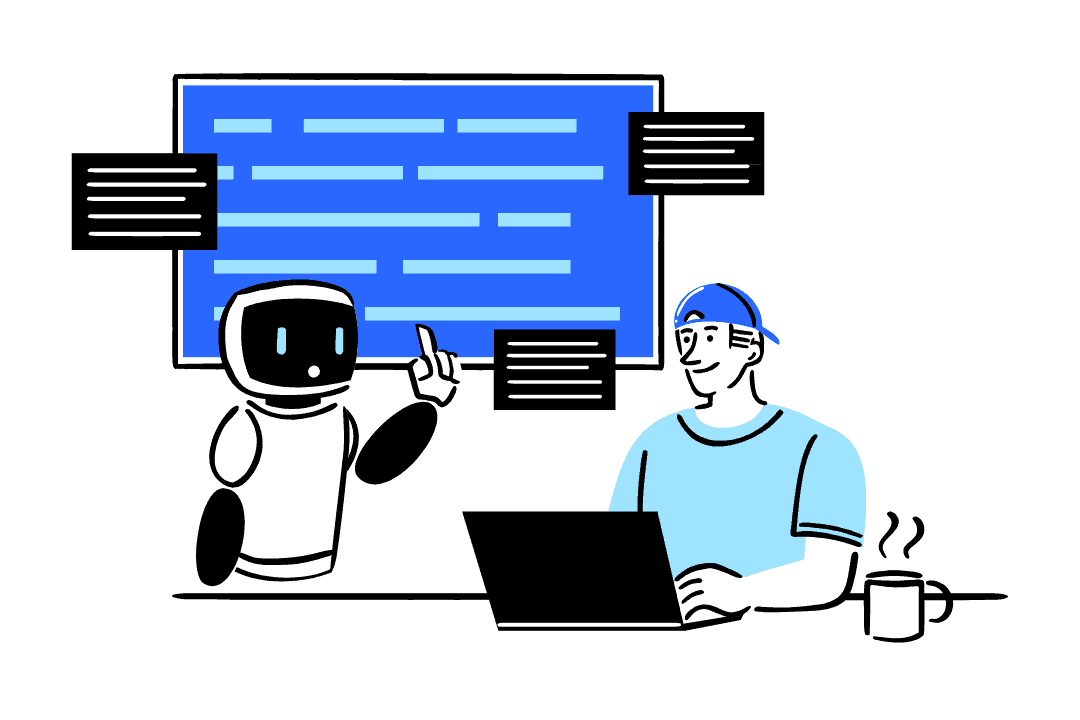
HR used to run on spreadsheets, shared inboxes, and a lot of repeated phone calls about time off, benefits, and policy questions. That’s changing fast, thanks to HR AI tools.
| Quick Answer: HR AI tools are software platforms that use machine learning and natural language processing to automate recruiting, employee support, and engagement tracking. The best ones in 2026 fall into a few clear categories: recruiting and resume screening, engagement and feedback, and chatbots, self-service, and help desk automation, each solving a different part of the HR workload. |
Here’s where AI adoption in HR actually stands right now:
- HR teams are under real pressure. The Society for Human Resource Management (SHRM)’s 2026 State of AI in HR research found that 87% of Chief Human Resources Officers (CHROs) expect AI adoption to keep accelerating inside their organizations
- McKinsey’s June 2026 report on HR’s dual mandate found that 88% of companies already use AI in at least one HR function, though only 39% report a material performance impact so far. This shows that plenty of tools are in place, but far fewer are actually moving the needle
That gap between adoption and actual impact is the real story here. Picking the right tool for the right job matters more than picking one tool to do everything.
This guide focuses on the categories where AI has changed day-to-day HR operations most, featuring well-established tools within each, and includes a dimension most roundups skip: compliance and data residency, which matters just as much as any feature list once real employee data is involved.
AI Recruiting and Resume Screening Tools
Recruiting is where AI adoption in HR started, and it’s still where the volume is heaviest.
- Eightfold AI: a talent intelligence platform built for large enterprises, using deep learning models to match candidates on skills and career trajectory rather than resume keywords, with internal mobility tools that surface open roles to existing employees and workforce planning that forecasts skills gaps
- Greenhouse: an enterprise ATS with AI built into the hiring workflow, including AI-generated scorecard summaries and resume-to-job matching against weighted criteria
Both tools focus on the same problem: getting past keyword matching so qualified candidates aren’t filtered out on phrasing alone. The tradeoff across this category is usually implementation depth. Enterprise-grade matching tends to come with enterprise-grade setup time.
Employee Engagement and Feedback Platforms
Employee engagement is a different problem from hiring: it’s about whether people actually want to stay.
- Culture Amp: turns employee survey feedback into specific, actionable insight, and its AI Coach helps managers build action plans, draft team communications, and prepare for difficult conversations
- Lattice: AI-drafted performance reviews grounded in real goal and feedback data, plus AI-generated goal progress summaries
Both tools work on the same underlying problem: turning scattered feedback and sentiment into something HR can actually act on, before disengagement turns into attrition.
HR Chatbots, Self-Service, and Help Desk Automation
Once people are hired and settling in, the next problem is day-to-day support: answering questions and handling tickets without a human in the loop every time.
- NITRO Copilot: an AI assistant embedded inside NITRO Help Desk for HR, with AI-driven ticket routing, prioritization, summarization, and sentiment and urgency analysis, alongside natural language knowledge base queries, conversational document search, and form autopilot, via Microsoft Teams as well as email, mobile, and the web portal
- Leena AI: AI-driven policy, payroll, and benefits Q&A with automated ticket triage and routing, integrated with Workday and SAP SuccessFactors
- Moveworks: conversational AI handling routine HR tasks like policy questions, name updates, and case tracking through existing Workday and SAP integrations
- ServiceNow HR Service Delivery: Now Assist generative AI for case summarization and suggested resolutions, AI-assisted knowledge base search, and a Virtual Agent using natural language understanding for conversational self-service
- Zendesk: AI agents generatively answer employee questions by pulling from connected knowledge sources, using agentic reasoning to handle multi-step requests, plus intent and sentiment-based ticket routing and AI-generated ticket summaries
- Freshservice: Freddy AI Agent autonomously handles employee requests through multi-turn conversations across Slack, Teams, and email, while Freddy AI Copilot drafts replies, summarizes tickets, and generates resolution notes
Employees interact with these tools directly, multiple times a week, which makes where they operate matter more here than in other categories such as recruiting or engagement tools that HR manages behind the scenes. Most tools in this category require learning a separate platform alongside the systems employees already use for everything else. NITRO Copilot’s approach is different by design, not necessarily better for every team, but it depends entirely on whether an organization already runs on Microsoft 365.
That Microsoft-native design goes further than the interface. It also shapes where the data itself lives, which is the next question worth asking of any HR AI tool.
Compliance and Data Residency in HR AI Tools
HR systems hold some of the most sensitive data in any organization: social security numbers, health information, pay history, disciplinary records, and immigration status. Before evaluating any tool’s features, a few questions are worth asking directly:
- Where does the data actually live, and whose infrastructure is it on?
- Is employee data shared with the AI model provider during processing, or only used to generate a response?
- Is there a government cloud option, like GCC or GCC High, if your organization needs one?
- Who has access to logs, and can you produce an audit trail if asked?
Most tools in the categories above are vendor-hosted SaaS platforms with custom, quote-based pricing and standard commercial cloud hosting. That’s a reasonable model for a lot of organizations.
For organizations that want full control over where their data lives, NITRO Copilot’s answer to these questions is specific:
- Deployments can run entirely within the customer’s own Azure environment, giving organizations complete control over their data
- GCC and GCC High environments are available for government customers, and those are customer-hosted only
- NITRO Copilot is set up to use an organization’s existing data sources without sharing that data with the external LLM model itself
For organizations that prefer a managed option instead, Crow Canyon can also host deployments in its own Azure environment.
For HR teams in government, healthcare, or other regulated environments, that data residency question often ends up mattering as much as any single feature comparison.
See it in action: Request a demo of NITRO Help Desk for HR, or watch the webinar on how NITRO Copilot fits into a Microsoft 365 environment and ensures data privacy and compliance.
Comparison Table
The table below lines up all ten tools by category, deployment model, and key AI capabilities, so it’s easy to see at a glance where each one earns its place and where NITRO Copilot stands apart.
| Tool | Category | Deployment / Data Model | Key Strengths (AI Capabilities) |
|---|---|---|---|
| Eightfold AI | Recruiting | Vendor cloud, custom pricing | Deep learning matches candidates by skills and career trajectory, and recommends internal mobility opportunities |
| Greenhouse | Recruiting | Vendor cloud, custom pricing | AI-generated scorecard summaries and resume-to-job matching against weighted criteria |
| Culture Amp | Engagement | Vendor cloud, per-user pricing | AI Coach turns survey insight into manager action plans and communications |
| Lattice | Engagement | Vendor cloud, per-user pricing | AI-drafted performance reviews grounded in real goal and feedback data, plus AI-generated goal progress summaries |
| NITRO Copilot | Chatbot / Help desk automation | Customer’s Azure or Crow Canyon’s Azure; GCC/GCC High available | AI-driven ticket routing, prioritization, summarization, and sentiment/urgency analysis, plus natural language knowledge base queries, document search, and form autopilot, built natively for organizations already running Microsoft 365 and Teams |
| Leena AI | Chatbot / Help desk automation | Vendor cloud, quote-based | AI-driven policy, payroll, and benefits Q&A with automated ticket triage and routing, integrated with Workday and SAP SuccessFactors |
| Moveworks | Chatbot / Help desk automation | Vendor cloud, quote-based | Conversational AI handling routine HR tasks through existing Workday and SAP integrations |
| ServiceNow HR Service Delivery | Chatbot / Help desk automation | Vendor cloud, custom pricing | Now Assist generative AI for case summarization and suggested resolutions, AI-assisted knowledge base search, and a natural-language Virtual Agent |
| Zendesk | Chatbot / Help desk automation | Vendor cloud, per-agent pricing | AI agents generatively answer questions from connected knowledge sources using agentic, multi-step reasoning, plus AI ticket summaries and sentiment-based routing |
| Freshservice | Chatbot / Help desk automation | Vendor cloud, per-agent pricing | Freddy AI Agent autonomously handles employee requests through multi-turn conversations, while Freddy AI Copilot drafts replies and summarizes tickets |
Choosing the Right Mix
No single platform here covers every category. That’s normal. According to the 2024-2025 HR Systems Survey from Sapient Insights Group, organizations were running 26 HR technology modules on average in 2024, more than double what they used in 2020. Layering a recruiting tool, an engagement platform, and a self-service or help desk layer, each doing one job well, is closer to how HR teams actually operate than picking one all-in-one system.
The real starting point is identifying which 2 or 3 categories match where your HR team is actually spending the most time right now, then evaluating tools against that problem, while weighing how well each one fits the environment your organization already runs on, not the other way around.